“When we play at cards you use an extra sense (it’s really not cheating) You can read my hand, I’ve got no defense“
Blondie, I’m Always Touched by Your Presence Dear.
I’m currently working through my current thinking on ghosts and sharing my ideas in the hope they will provoke some discussion and new ideas. Dr David Sivier is responding on his blog and others have commented: because of limited time I’m not responding to every comment immediately as some will be addressed in future pieces.
Please do jump in and get involved!
In part one and two I made considerable reference to the telepathic theory of ghosts promulgated by the early SPR researchers. Frederic Myers actually coined the phrase “telepathy” to describe the thought transference he and Gurney initially suspected as being the basis for apparitional experience as described in part one.
As I have already mentioned there are two immediately obvious and potentially fatal objection to the telepathic spook hypothesis: one is physical phenomena, where a ghost moves an item or opens a door, and the second would be a sound recording or photograph of a ghost. In the telepathic hypothesis ghosts are entities of mind stuff without material substance — so they don’t create sound waves or reflect photons.
I don’t find the second particularly difficult as so-called ghost photos are often frustratingly awful. In fact that might give us a clue as to how any genuine examples are created: direct to film or digital media by the mind, creating blurry Serios type images. Sadly fraud and wishful thinking seem more likely.
The first category, physical phenomena seemingly originating from ghosts is a far bigger problem. Long ago I found myself in a hotel room with a beautiful blonde lady: and naturally I therefore immediately felt a strong urge to review a large selection of spontaneous case reports. We both fell apart still reading them, but while romance was definitely not the winner we did make an important realisation – case reports of phenomena actually encountered in real hauntings were closer to the kind of thing seen on “Most Haunted” than the academic literature of the SPR theorists.
So why did Myers and Gurney neglect physical phenomena like beds shaking, knocking and raps, objects moving or even appearing and disappearing? Well firstly they did not entirely — they put them in a different category from apparitions, the poltergeist. Hence ever since physical phenomena are ascribed to poltergeists, and visual appearances to ghosts; apples and oranges, different creatures.
Why? I’ve written about it in several papers now but the early SPR was founded by William Barrett and others who were sympathetic in many ways to mediumistic phenomena, but handed to Sidgwick, Gurney and Myers who were soon publishing exposures of fraud, largely revolving around fake physical mediumship. The early SPR was seen as a debunking sceptical and prejudiced group by many of the more Spiritualistically inclined members, and the SPR inner circle sidelined Barrett, Stainton Moses and Stead’s circle leading eventually to the schism where 200 or more members left to found what would become the London Spiritualist Alliance.
The SPR and particularly Frank Podmore were however sympathetic to thought transference and to the “higher phenomena” as they termed mental mediumship, while suspecting physical phenomena were mainly fraud. Experiments in telepathy and clairvoyance suggested to them they were dealing with a genuine unknown force: they were inclined to explain ghosts in terms of it.
In fact in the Census of Hallucinations the SPR firstly betray their theoretical basis in the name; and secondly do not ask about physical phenomena associated with ghosts.
“Have you ever, when believing yourself to be completely awake, had a vivid impression of seeing or being touched by a living being or inanimate object, or of hearing a voice; which impression, so far as you could discover, was not due to any external physical cause?” (Sidgwick et al. 1894
As such the scope of the study that proved the cornerstone on theoretical work on ghosts ever since – Tyrrell, Green & McCreery, Evans, Smith etc etc was consciously or not designed to exclude physical phenomena. (Curiously something very similar is happening in the media today – I will return to this in a future piece).
So following this theoretical separation ghosts and poltergeists have been treated separately, and reported as if distinct. As soon as I got actively involved with Psychical Research in 1987 I began to suspect this distinction was false: by 1994 I had coined “polterghost” for a category of cases with strong overlaps. In fact though I did not realise it at the time Cornell and Gauld in their book Poltergeists (1979) had already effectively demonstrated this with the computerised cluster analysis. So is the telepathic ghost without legs, or sheets?
Not necessarly: if we accept General ESP then along with telepathy we allow for psychokinesis, or if you prefer telekinesis. Telekinesis is the movement of an object at a distance: psychokinesis is the same but implies a mind is the cause. (Telekinesis is preferable as theory neutral but psychokinesis usually abbreviated to PK is the more common usage). If a ghost can be created by a telepathic impulse, well you can theoretically move any item by PK. Again it is the witness, the percipient who actually does this using their own psychic powers, perhaps at the subtle prompting of the ghost.
So what if like I do you reject the division between ghosts and poltergeists seeing them as phenomena on a broad spectrum? Well this explains that, whereas the classic SPR division sees ghosts as manifestations of telepathy and poltergeists as RSPK (recurrent spontaneous psychokinesis).
The problem with these theories is that we “solve” one set of mysteries by invoking another – human psychical powers, ESP (extrasensory perception). Unfortunate the heat has given me a headache so I’m going to leave it here for today and post again tomorrow.
“Heavy footsteps in your attic means a spectre telepathic Is descending just to spirit you away, Ya-a-a-ay!”
Theme from Rentaghost – Michael Staniforth
In the first part I briefly discussed the mechanics of “seeing” Ghosts and described how the SPR group came to the conclusion they were telepathic signals converted in to visual images and superimposed on the external world as if seen by the visual processing part of the brain. Technically they are therefore hallucinations: the classic definition of a hallucination being a false sensory input.
What then if the apparition conveys objectively true information unknown to the percipient (witness)? We call these veridical cases, and they suggest ghosts are more than just an illusion. If its a telepathic impulse as the SPR founders believed back in the 1880s though we won’t be able to photograph a ghost, or measure it with instruments, or record its footprints. The notion of “ghosthunting” as we see it on TV becomes fairly pointless.
Except just possibly we might now finally be able to see ghosts technologically, assuming the SPR telepathy hypothesis is correct and the Spiritualist spirit hypothesis not so. If a ghost is a telepathic impulse we might assume it works by transmitting a signal, received by the witnesses brain. The witness then creates the visual image and “sees” the ghost. So how can we see telepathy?
Well terrifying as it may feel there are plenty of scientists working on technological mindreading, often for benign reasons. Long term readers of 2000AD comic who recall the Psi Judges or SF rpg fans familiar with the Zhodani or ordinary citizens living in totalitarian societies may understand my concerns about this research — the good news is from what I’ve seen in the media it is expensive, needs electrodes next to the skull and is primitive in capabilities. Here are a few examples
The last article is the most interesting: so far songs and images and now language commands have been transmitted and decoded by this artificial electronic scanning and then recreation on a screen. Utopian or nightmarish it might change the world; tin foil hats might be the fashion essential of the 2050s. So what’s this got to do with ghosts?
If Myers was right and a mind (living or dead) sends a signal that telepathically received leads to the seeing of a ghost, then with the right receivers aimed at the environment not a target brain you can pick up, and the decoding software if not trained to exclude those signals will pick up ghost and make them visible and audible. Science might discover ghosts in technological anomalies on these experiments: as far as I know I.am the first person to state this, and yet I believe my logic is sound.
Gurney believed that rather than the signal being transmitted by the spook, the witness scans the environment constantly for signals and picks up tje ghost. It doesn’t much difference; if disembodied signals are out there the software used to reconstruct them in to meaningful language or symbols will make ghosts visible…
The AI programmes that sort the signal would have to be receiving a physical source: and to Myers et al. that source was usually a living brain. This would suggests that most recognised apparitions of individuals would be from people who were alive in the current lifespan of others, as someone has to remember them to transmit the signal.
Intriguingly it would also suggest celebrities and famous people would be seen more than say my grandmother; billions of people have seen the image of Elvis Presley or Doris Day or Quuen Elizabeth II, and could therefore transmit them as a ghost?
Of course the receiver also has a role in the creation of the ghost hallucination. Their brain to impose the spook on their visual field first has to construct it, and that requires a stock of imagery. (In my dreams I often see houses, places, people I have seen in my life: rarely unicorns). Once again famous people or archetypal imagery might be commonplace.
So will technotelepathy allow the creation of Holtzmann ghost goggles or whatever you wish to call them? This works on a reductionist paradigm but the problem is the signal is going to be weak, and as Dr Sivier frequently points out the physical structure of human brains vary (by individual — larger generalisations to groups are hotly contested). The signal is also rapidly going to decay and drop off with distance — though of course one of the problems with reconciling contemporary physics with ESP is that ESP does not seem to follow an inverse square or any other decline – it acts as if time/space are irrelevant. So maybe – just maybe – we can effectively launch a SPMI to join SETI; a search for post mortem intelligences. Phone calls to the dead, not from the dead. For 66 years I phoned my mother every day at 6pm; if I ever get to do it again it will certainly be a surprise, though a welcome one.
What is absolutely going to be possible via this new technotelepathy is to sit in your friends brain, and see what they are seeing. Your psychic friend will no longer have to describe what they are seeing or hearing or sensing – you will be able to remotely watch their brain’s output. In a sense the new technology will allow us to see ghosts at least that way, though traditional psychics will die out as when they contact your grandad they might just be reading your mind on a smartphone app. Hey, it will make dating more interesting…
There are a lot of things I’d like to talk about: in the next part I’ll tackle metaphoric visions, Tyrrell and Evans, and explore the seemingly fatal objection to the telepathic spook hypothesis posed by poltergeists and physical phenomena. Don’t fret though – we will solve this ghost business, or at least make some advances if we keep up the pace.
Sometimes that pace leaves me feeling giddy, sometimes scared, but wherever we are going we charge on in search of the truth.
“That stole the only girl I loved And drowned her deep inside of me” — The Cure, Just Like Heaven
I’ve written a lot on UFOs recently, a topic where I know relatively little so I’m just going to write a little bit about ghosts.
My current working hypothesis is as follows, and very simple, so please feel free to critique it…
I think when we see ghosts our brain processes the image. This is exactly the same as when we see a cat or a house or a film or anything else.
We see normally with our eyes. Light reflected off an object hits the surface of our eyes where we have cells called photoreceptors. These convert the light impressions in to electrical impuses that travel from the optic nerve to the brain. Various bits of the brain in fact: the Lateral geniculate nucleus is the most important. You can look up the LGN if interested or vision and the brain; for now all we need to now is the signals are processed and sent on to the Primary Visual Cortex, a small part of the brain at the back. You don’t need to know the technical stuff – it is brain science – but then lots of bits of the brain work together to create the picture you seem. (In fact if there is one rule that often works well with the brain its that almost any function is spread out over many different parts).
So we see with our eyes AND the brain. You need both as a human to see. If you close your eyes you don’t see, and if you remove your brain the same thing, (though you could still post on some parts of the web and noone would notice. 😉 ).
So can we see with our brain’s Visual systems without our eyes? I can’t as I can’t “see” images but most people can close their eyes and imagine seeing a green triangle, a chess Knight or a traffic light. It might be fuzzy or brief but you can see with your mind. However there is another way we can do it, even if we can’t control it normally – this morning I was on a cruise ship in the Carribean when Becky messaged me and I woke up in my bedroom at home. In dreams we see mental landscapes as if through our eyes, and yet we are seeing in the brain.
Can we add mind images to eye inputs? Yes some people do this naturally owing to chemical problems with the brain, but they can superimpose mental images know top of the input from their eyes. They might see aliens coming out of the walls, a friends face turn in to a serpent or be followed by a terrifying black puma – all real examples from patients I knew. Fortunately we have medicine that can treat these hallucinations – false Visual inputs.
You can also cause hallucinations by altering the chemical balance of your body in other ways – fasting, starvation, alcohol, nutritional imbalance, exhaustion or most famously psychedelic drugs.
All these states seem to be false Visual inputs, tricking your mind in to seeing something not there. We tend to think of Hallucinations as always untruthful – but in fact our brain constantly fills in data, editing and processing what we see, filling in the blind spot in out Visual input.
So what is a ghost? A hallucination, a mind created image not involving the eyes. Is it just an illusion? Some ghosts undoubtedly are. The SPR researchers pointed out though that there are veridical ghosts, which imply something more is going on and they are called veridical cases
When the ghost is seen by multiple people at once.
When the same ghost is seen by multiple people over time.
When their ghost appears at the same time as someone’s death.
When the ghost tells you something you could not otherwise know.
There are other possibilities: and of course other ghost experiences that don’t meet these criteria could be more than a false hallucination, we just can’t prove it.
The early SPR researchers had to explain where the signal came from that caused these veridical cases — they formulated the notion of telepathy to explain it. Telepathy is direct mind to mind contact, and might be originated from a living or a dead mind. Phantasms of the living, or ghosts of the dead – either was possible.
Of course some people might be more “psychic(al)” – more tuned in. And as ghosts live in our brains there is no point in ghosthunting, if by that we mean using cameras and recording equipment.
In part 2 I’ll look at this in more depth and raise the obvious objection – for now though please do share your thoughts. I’ll post on UFOs again tomorrow.
“Officer Krupke, you’re really a slob. This boy don’t need a doctor, just a good honest job. Society’s played him a terrible trick, And sociologically he’s sick!”
C.G Jung interpreted UFOs as spiritual symbols and took a Psychosocial Model.
Gee, Officer Krupke — West Side Story
So having looked briefly at why fairies and UFOs are more complicated than we might realise yesterday I’m going to move on today to another plank of ufology; the Psychosocial model. Confusingly the term is used differently by different researchers to mean slightly different things but basically it means that societal anxieties and pressures play a role in the UFO experience.
First though I’d better point out that there are effectively two ufologies and have been for thirty years. One set of ufologists, generally associated with the USA, are very much involved with the ETH – the Extraterrestial Hypothesis, the notion that UFOs are spaceships (or extradimensional entities or from Atlantis or the Hollow Earth or wherever). The important thing is they believe they are technological physical craft (and those who believe they are Nazi Flying Saucers/ secret Canadian spy drones or Top Secret USAF projects share that assumption, just disagreeing on the origins).
American UFOlogy tends to have the Roswell incident at the heart – and it is no secret that I doubt that was anything more than a USAF experiment coming down. Nuts n Bolts ufology has an embarassing number of sightings for extraterrestrials (too many?) but something of a paucity of physical traces left by their visits: I am therefore usually classed as an exponent of the second model, Psychosocial UFOlogy, rather than American nuts n bolts ufology. Naturally I am therefore going to critique my own beliefs in this piece.
It’s worth reading about each of these cases by the way, as helping forge a lot of modern understandings of UFOs. Flaps are groupings of sightings, and social scientists from early on tended to see them as a sort of moral panic or societal hysteria. There was certainly a notion of contagion- once somebody saw on TV or read in the paper about a UFO sighting they were primed to interpret their experiences the same way. Distant lights in the sky form Rorsach blots; how you interpret them says more about you than the lights?
So the idea evolved that UFO sightings were usually misunderstandings of normal phenomena, but the witness simply made an honest mistake. This could lead to a cultural idea of UFOs and what they mean that reflected what was going on in broader society. The 50s Martians in their Flying Saucers reflect the Red Scares and McCarthyism; the 70s UFOs ecological and New Age themes; the 90s UFOs were sinister agents of conspiracy with the US Federal government; the twenty year cycle skipped the 2010s before exploding as whistleblowers and the Disclosure Movement now.
There is no doubt there is an element of truth in it – Robert Moore ‘s history of British UFOlogy I published in the previous issue of ANOMALY clearly lies out how UFO beliefs changed over seven ages of UFOlogy. The problem is the same is true of most things: pop music saw Skiffle, RnB, pop, Rock, Metal, Disco, Prog, Punk, Electronica etc etc come and go in the same period. Each age has a Zeitgeist and the music of an era reflects the themes and tensions of the era. UFO culture is like music, a product of its times, and UFO experiences are often filtered through the interpretative lens of that UFOlogy, that decides which cases to report and how to interpret them.
So we need to go back to the first hand reports of the experiences as Robert tried to do, and see how they change over time. ASSAP Treasurer Becky Smith did her PhD comparing Victorian reports of ghosts with those of ghost experiences reported today, and discovered that 120 years of social and cultural change had not impacted the core phenomenon. Ghosts are the same now as in 1894, despite the very different way our society makes sense of them, despite all the movies and yes even the reality tv shows.
I’m reminded of David Hufford’s classic study of the Old Hag/Sleep Paralysis phenomena in his “The Terror that Comes in the Night : an experience-centered study of supernatural assault traditions” (1982). It is a great book, and it it Hufford considers the root of the stories – do they grow out of a cultural source, or are they experiences based in real states? The latter is true: of course interpretation is cultural.
My personal line of enquiry on UFOs is broadly sceptical: I have much sympathy with Jean-Michel Abrassart ‘s sceptical view of UFO experiences and his argument many are rooted in simple musidentifications of natural phenomena such as stars, aircraft or as the fascinating paper on the Saros cycle published in Anomaly showed even the Moon. Yes of course our mind boggles that people can misinterpret the moon as something strange, but is that really harder to believe than alien spaceships?
Nonetheless I have come to reject the Psychosocial Model as it is often expresssed; at least in one form. The evidence does not support it. In 2020 we all took part in a huge period of societal upheaval, probably the largest since World War 2, as a novel coronavirus exploded across the globe. In March 2020 I developed it, and was pretty unwell, and faced my own mortality head on. Lockdowns occurred, and though I’d posted warnings here on ASSAP Facebook as early as February that we might see this the reality was a shock to many (I was also called histrionic and a fantasist: being right on this occasion gave me very little satisfaction).
In terms of societal anxieties this was the big one: I immediately realised we would be able to test the hypothesis that such stresses led to a growth in paranormal reports. Fortunately I had the reporting phoneline, and I copied myself in to emails reporting experiences to ASSAP. I was ready for the Flap to end all Flaps. And you know what? It never came!
Well sort of. The press reported an explosion of paranormal experiences and UFO sightings had been caused by the pandemic: but where did they get their figures from? The SPR have not shared hard data with me, but chats with Graham Kidd of the Spontaneous Cases Committee suggest the pattern was clear – no increase, possibly even a drop.
Journalists approached me but lost interest when I said “I’m not seeing any increase”. New Scientist and other pop science journals ran articles where academics talked about an explosion of paranormal belief as well as experience. It never happened – Dave Wood had instituted an annual YouGov survey on behalf of ASSAP, and the figures showed at the end of the pandemic no significant effect. So why was it reported so widely that scared by covid-19 people were seeing spooks and experiencing aliens?
Because social scientists and cynical journalists believed it was true, because it met their reductionist view and notion that superstition flickers endlessly in the human heart. We saw no articles, at least I did not note them, about people turning to religion. No we were all supposedly traumatised and imagining stuff. A 21st century myth was born and no journalist chose to print my data driven doubts.
Now one thing we saw a lot of during the pandemic was science being manipulated for political ends and some pretty loathsome and indeed dangerous nonsense spouted. I’m not going to get into it, but one thing I will point out is how critics of lockdown talked about a huge wave of suicides that would result from economic inactivity and the anxieties of the pandemic. The notion that a decline in GDP leads to thousands of suicides is actually based on a line from the movie Wall Street: the justification was a study of self harm in the 1930s Great Depression, advocated as a clear reason to send people back to work. There are lots of decent peer reviewed academic papers saying we must mitigate suicide by careful measures. The Samaritans asked for extra funding.
It was nonsense; while every news source reported it they remained silent once nearly two years latter I was able to access the ONS data and, yes male suicide significantly fell in the period and women saw no significant change. (Except the Samsritans who reported honestly they had been wrong). It had been a drum banged without evidence by some to try and end lockdown; whether ending lockdowns was right or wrong this was not the reason we should do it.
So maybe something in the nature of the Covid pandemic made it unlike other societal stresses? In 2023 Russia invaded Ukraine — and for the first time in thirty years nuclear war seemed a real possibility. Various events ramped up the tension and a whole new level of societal stress came back. The Hamas attack on Israel and invasion of Gaza pushed 2024 the same way, and well let’s face it everything is pretty awful? So where are the UFO Flaps?
So at the societal level I don’t but the Psychosocial Model anymore. There was in fact one, and only one, Fortean phenomenon that went through the roof during lockdown. Anomalous big cat sightings increased all across the UK – which I guess makes sense if they are real flesh and blood animals – though I personally have always doubted this. Or rather I think they probably are — mididentified foxes, badgers, muntjac or domestic kitty cats. I’m probably wrong — but I’m still going to be more right than pop science journalists writing about stuff that suits their personal prejudices as if it was real.
In part 3 I guess I’ll look at another aspect of UFO belief, not that anyone will read it. 0;)
“Only came outside to watch the night fall with the rain”. – Planet Earth, Duran Duran.
Andrew Oakley once shrewdly observed once that “a UFO is a ghost seen more than 30° above the horizon”, and I believe he is probably right. It has become a truism to state “UFO inhabitants are the faeries reported in the past” — Vallée’s Passport to Magonia may be little read but its shadow is long.
I’m primarily a ghost researcher; I know relatively little about UFOs, compared with spooks (though rather more I suspect than some vocal ufologists do?) but there are immediate problems with equating Puck with the Greys or whatever — fairies as we know them are a highly literary device. Let me explain that…
A few years back I noted that a paper cited by Richard Wiseman in Paranormality was at variance with most other research. I won’t name the researchers here — but they had used collections of US ghost experiences from travelogue style books by one author as their source material for the analysis. Edited narratives, written in the style of spooky stories to entertain, recorded third hand via the author and the owner of the tourist attractions. Unsurprisingly the analysis showed the fruit of those agendas and the editorial style of Myers (no, not that one!)
Our understanding of fairy belief is similar: we know about fairies in the theatrical tradition because we have plays – but that tells us more about the conventions of Elizabethan drama and Shakespeares ideas than what people really believed about fairies. We don’t use Tinkerbell as a source for Edwardian fairy belief — but then Cottingley and Theosophy mask there whatever was actually believed.
Most of our ideas of what happened in the past are like this – based on fragments of written sources that favour the literary and elite written culture we have preserved. Of course we have preserved oral history too, and fairies definitely count as Folklore?
Except Folklore is dead folk belief. You record a story from an informant, or many, fossilise the story, give it perhaps some analysis and a canonical meaning and maybe a dodgy guess at an origin, and soon everyone knows the right words to ring O ring O rosies and that it dates to the Plague, Black Death or the Duke of Wellington’s flatulence. OK I made up the last one. Folklore is forged by folklorists, or rather by Folklore collectors, like Holst and Vaughan Williams collecting folk songs hummed by workers in rural mummerset before the war.
Vanishing House – Rougham, Suffolk
So what can we say about fairies? More than I might suggest here, but imagine goblins before and after Tolkein, Games Workshop and D&D. Our contemporary conceptual frameworks are shaped by mass media and the zeitgeist, and Vallées Passport to Magonia now shapes how we see UFO experiences because it permeates our culture. It’s similar to how your birthsign might actually reflect your personality – you grew up being told being told that’s what you were like by astrology so maybe you did!
Folklorists faced real problems in selecting what to record. If I started to record beliefs from my family I might begin with “if you move house smear butter on your cats paws; it will sit and lick it off and stick around hoping for more”. What actually happens is you get buttery carpets and cat vomit everywhere, and possibly an expensive vet visit. Likewise sore throats can be addressed by rolling little balls of butter in sugar and giving them to your child to suck. I suspect Social Services would take an interest in that one! A red sky at night means a fine day tomorrow, that’s pretty standard; if you consume deadly poison immediately drink a glass of milk as it absorbs the poisons. Never cross on the stairs it’s bad luck, and never put your shoes on the table.
Folk traditions pass through families
I could go on for ages – but what differentiates this from my father’s belief backing second favourites was a sound strategy or that buying old Volvos was better because everything Scandinavian is better? Does an idea have to be supernatural? My sister recorded my grandmother telling stories of General Tom Thumb and singing folk songs – but they were musical acts of the 1880s sung to her by her mother in the crib. (Sadly her mother died while Alice was an infant, her father when she was fourteen. Genes, songs and childhood stories are all they passed on. Laura and Frank, rest in peace; dead before the Great War I heard their voices through Alice’s childcare too). So now is a Beach Boys song Folklore? What if we take Sloop John B, change the lyrics, and sing it on a football terrace? Is that song Folklore?
Talking of songs Taylor Swift, who is ubiquitous and without the invocation of whose name any article on UFOs would be “oh so twentieth century — oh so 1970s!” released an album called “Folklore”. My father’s generation were critical of folklore because they group up with the Volkisch movement in Germany and ethno-nationalist mythologising across Europe. A romanticised pastoral view of ethnic nationalism that soon shaded in to antisemitism (“the outsider within”) and Fascism. (As in actual Real Italian, Francoist, Nazi and even Moseleyite Fascism – not just politicians we despise).
Now I am absokutely 100% certain Taylor Swift is no Fascist – just to be clear – but Folklore has been redeemed. Its cosy, and safe, like the Danish hygge (that dad insisted was a marketing invention as it was not part of his experience of 1920s and 30s Denmark!). We are deeply suspicious of the Union Jack but we love white horses on hillsides and bonfire night and cosy customs that let us all live slowly while the churchbells softly chime. Our Folklore is a positive celebration of our heritage, our identities and is as snug as Robin of Sherwood on the TV or indeed any childhood memory: Blakes Seven, The A Team, fireworks and Madness on the radio. Folklore is a nostalgic retreat from a horrific now to a magical land we once lived in.
Do the fairies live there? Do the aliens who pilot saucers around my skies chuckle robotically at primitive earth potatoes? Do neon orange horned blobs with devilish grins bounce from UFOs to abduct travellers on lonely roads? Do milkbottles in supermarkets get drained by fairy humphreys if not watched? Do small blue aliens with white phyrgian caps serve the sinister shapechanging aliens Morph and Chas???
So the notion UFOnauts are just modern fairies is far from simple. It’s hard to know what people in the past thought about fairies, and indeed if that was even a category in some times and places. Once you categorise a beastie as a fairy be it a pooka, goblin, elf, troll, kobold, djinn, Melusine, chimera, cyclops, banshee, poltergeist, Black Shuck, imp, smurf or pokémon you immediately ascribe certain fairy qualities to it. By describing it as one you create a category that may or may not reflect a real group of entities. How do we know Nessie is of the same stuff as barguests or even will O the wisps the same as Jack O lantern?
So calling UFOnauts – but rarely I note UFOs themselves — Fairies is a lot less straightforward than people believe. And to conclude part one, let us look at fairy belief today, in folklore. In fact almost every family has some beliefs about fairies they impart to their children, usually some variation on a fairy leaving a coin under your pillow when you lose a tooth. I believe you have to leave the tooth under a pillow and the fairy makes off with it (one imagines so it can use it as a sympathetic magic connection to cast spells on you?). This is an actual practice and authentic folk belief – so are elf on a shelf, chocolate Easter eggs, Santa Claus and his reindeer and the Christmas tree but some of those might predate than my grandfather (the Christmas tree, by forty years in Denmark, but not here!) All folk traditions begin somewhere.
It took a week to get the green stuff off.
The problem is how are UFOnauts like the Tooth Fairy? And how is the Tooth Fairy like Black Shuck? What do we mean when we invoke the category Fairy?
I’m going to carry on with a part 2 in which I critique other UFO ideas – but please do comment, criticise my logic and most importantly share your family Tooth Fairy traditions if you read this far, and your families folklore.
Disclaimer: this is a work of fiction, and none of the entities, characters, organisations, locations, events or references are meant to depict any real entity. Any vague similarities with real events, people facts etc are entirely -one might say ludicrously unlikely – and coincidental (except for Robert Moore whose sad death I wished to commemorate) No Exec members of any fictional group were horribly slain in the making of this story. And please if you do mention it to others, avoid spoilers. Oh and and, I have not proofread this at all. Sorry but it is Christmas Eve and I need to get to the 24 hour garage…
***
It has been a quiet year at the Association for Scientific Study of Anomalous Phenomena. Sure, we’d had the usual in-fighting, published the journal Anomaly and run successful conferences and training events; but in terms of phenomena there had been little to report.
2023 had all been about the belated US realisation that there was more to UFOs than Roswell and little grey men, at least in the media. The papers had been full of American whistleblowers, conspiracy theorists and “experts”; our own people kept their heads down and their mouths shut on the whole. We lost one of our best, Robert Moore, taken too young by heart failure. I miss him: we shared a love of rpgs and enthusiasm for detailed case research, of the type we don’t see much nowadays.
It’s been a rough year in many ways but it looked like the weird was on the way out; not so much as a rain of frogs on Slough, Satan’s footprints in the Dorset snow or a half-decent poltergeist in Pontefract. In fact I’d settle for an indecent poltergeist in Plymouth – the tabloids would love that.
Now you’ve all seen Ghostbusters and you know all the jokes, but sadly it’s not like that. Well we are broke, that bit is true, and maybe the Chair is more like a gameshow host than a scientist, but it’s not true the kids love us. In fact the kids, much like the university, find us ridiculous. An embarrassment. An anachronistic bunch of lunatics. I think back to how as a teenager I poked fun at Spiritualist Mediums, and I understand. We are ridiculous: until the going gets weird and then we are your first, last and only line of defense against…
‘Twas the week before Christmas and the Secretary was on the phone, sounding rather the worse for gin and repeating for the third time “yes, Werewolves. Yes. Lon Chaney type hairy b******s. Werewolves. Yes, they are serious. Place is full of police. Do we have any 19mm Parabellum silver bullets? Why are you laughing? Ask Training? OK, will do…”
“Yeah but Hollywood will love it. We will just be replaced by the Warrens?”
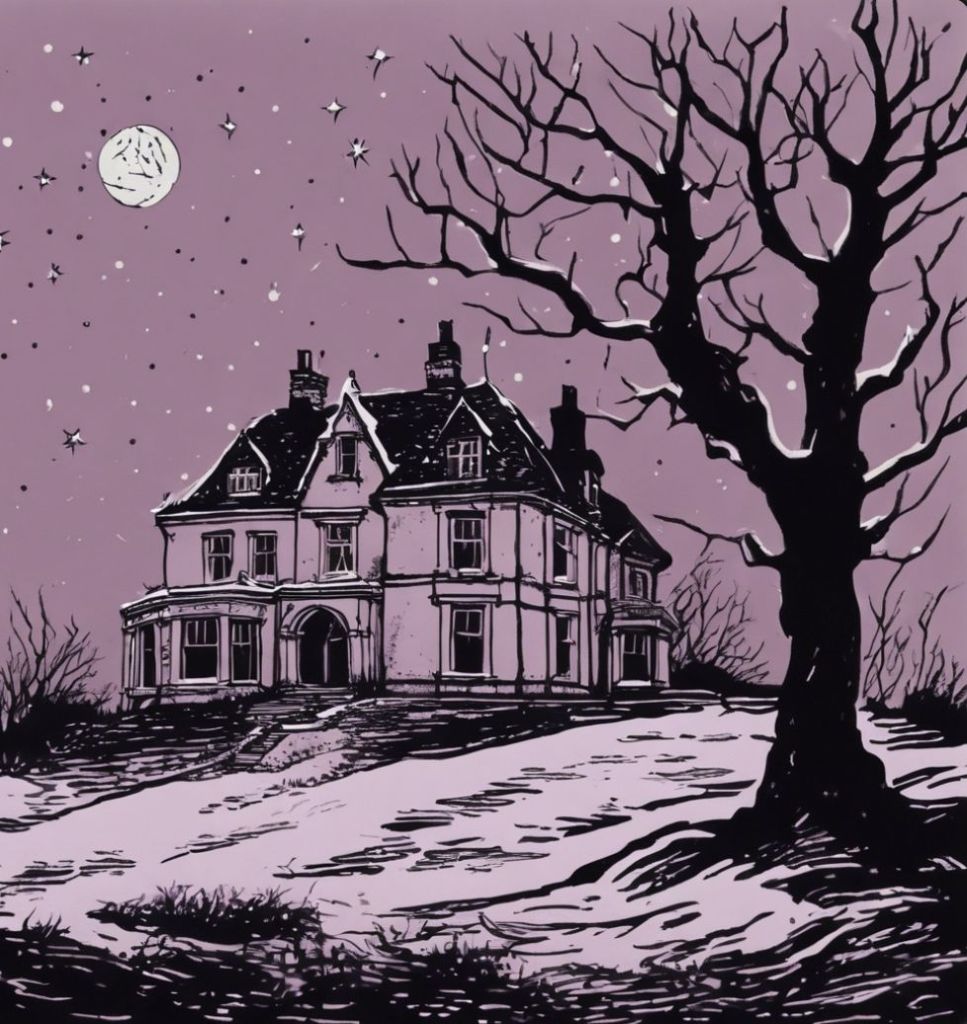
The case sounded ridicolous; but there were at least three dead, and a seriously freaked out bunch of survivors running around the woods in terror. It sounded like the police who responded to the incident were not much calmer. Clearly someone needed to head down there, and calm matters down, and while the NRPI teams were getting briefed, that had better be me. In fact I put the word out: this could be our moment — I wanted every Exec to drop everything even if it was the Friday before Christmas, and get themselves over to W———— Mansion, a ruined gothic house decaying in a hidden valley in Gloucestershire. This is what we’d been training for, this is it boys, this is — werewolves?
***
On the drive down I mentally reviewed my knowledge of lycanthropes. No, I had never encountered one — there was the story of the Horringer Court werewolf in Bury of course, and I’d seen the sheep killed out Barton Mills way, but no werewolves. I’d joked that the big cats seen prowling the British countryside must be lycanthropes, but the idea of real werewolves? Beyond my Boggle threshold. Something however had killed three ghost hunters and left them as bloodied piles of rags, and whatever it was it was still out there. The moon rises over the hill ahead; waxing gibbous, full on Boxing Day? What self-respecting werewolf would attack several days early? I vaguely mused on whether lycanthropes had union regulations, but before I can google it we arrive at the mansion gates.
It is a mile from the car park down the valley through the woods, and police tape closed the entrance. We decided to stroll down and find the police, and we had not gone far before we heard a panicked cry off to the left “its in the trees! It’s coming!” We just had time to duck as a three round burst stung the brush to life, a startled pheasant took wing and we made contact with the firearms officers who’d come close to adding us to the ghosts of the Park.
***
ĶYou’ve seen the pictures on the news off the bloodbath in the Mansion. There were five known victims by the time we arrived, and we crept through echoing gothic corridors whispering in voices muted by the very real presence of death. Sure, there may not be an actual werewolf, but *something* had apparently entered through a window and utterly eviscerated three women performing glass divination, before stalking and killing two more ghost hunters. The only clue was the kitten ball trigger object was missing; could this be the work of a homicidal maniac ghost-hunter-hunter triggered into a psychotic rage by kitten balls? I’m guessing this is not the case?!
While ambulances evacuate survivors and the police establish an incident room in the safety of The Bear at Rodborough, we pace nervously around while the SOCOs do their forensic duty. Apart from a dictaphone and a blood spattered ouija board there is not much left in the room.
One familiar face catches my attention: Richard Freeman, looking like a gnome in police coveralls. It’s pretty clear he has taken charge, so I wait till he is ready to talk. As soon as the moment arose I greet him with a question “Werewolf?”.
There is something of Dr. Who about Richard. The early ones; possibly Jon Pertwee. This feels increasingly like an episode of that time travelling drama, but I’m not cut out to play the Brigadier. “Nope. Guess again!” The cryptozoologist looks at me straightfaced so I respond the same way, as if this is not a tragically bizarre situation. “Panther?”.
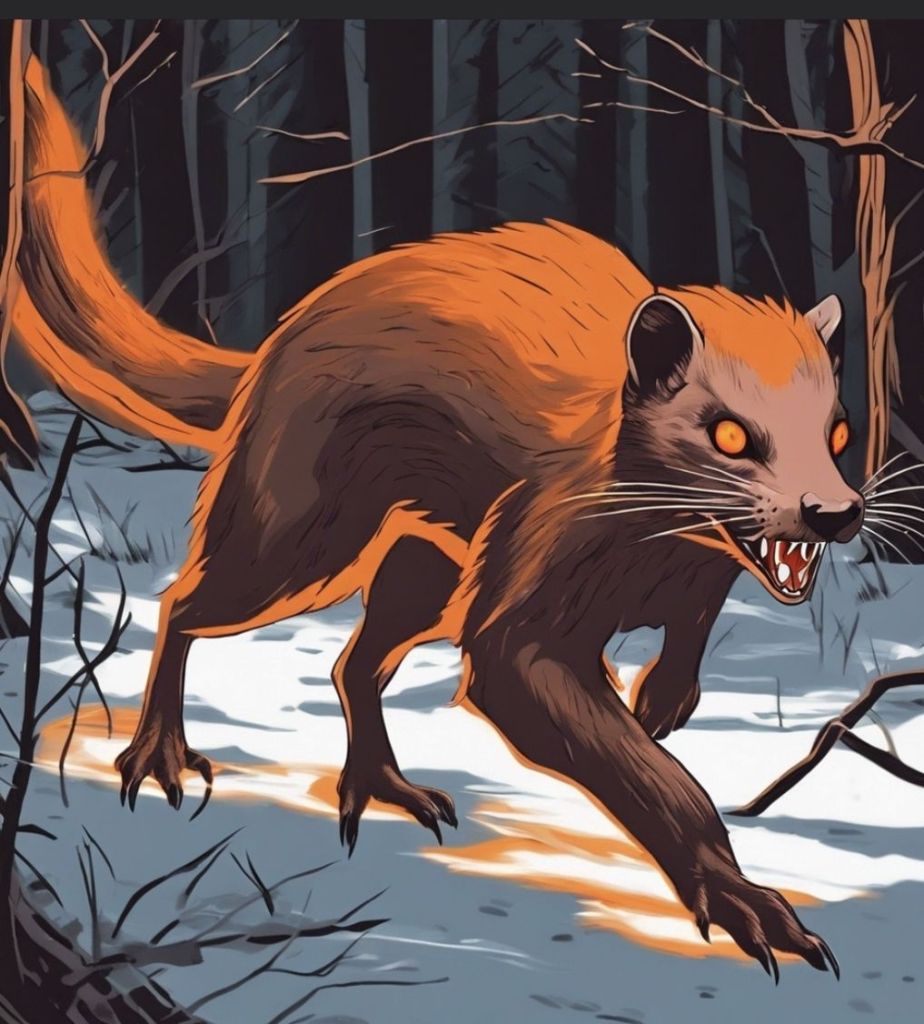
Richard shrugs “Closer but the bodies were eviscerated after the kill. It looks like the skulls were cracked by a single snapping bite. In all my experience closest thing I’ve seen kill something this way is a weasel.” We look at each other solemnly, and I nod as if giant woman-eating weasels were not an unusual part of my daily routine. I do not like to let on this is my first time.
***
By this time my team have started to roll in; as instructed the NRPI are to gather at The Bear, the Exec to be allowed through the cordon. It is clear a dangerous carnivorous and seemingly still hungry monster is roaming the area; exactly the kind of situation where I want my board members to hand. I figure once it eats one or two of them it will be far easier to defeat; the ensuing indigestion should ensure that…
The Groups Officer wanders in first; wearing his cowboy hat, swinging nonchantly a Glock 17 he’d liberated from a police corpse out the front. At least that explained why the sentry had not told us of our mans arrival; poor fellow had been decapitated and left slumped by the door. We get a call saying we’ll soon be joined by Training: he’s doing a ton up all the way down the A40 from Fishguard with a police escort: more importantly he has the Mk3 Carnacki Electric Pentacle in the boot.
Now I know most of you don’t care about this stuff, and Steve’s Mk2 is way more robust with the perspex tubes and LEDs, and sure you can amend the frequency by his iPhone app — but I think Carnacki used vacuum tubes for a better reason than Maplins not having been invented then. Steve might wear Harry Price’s hat both figuratively and literally, but Thomas Carnacki was also a fine occultist, and I’ve read enough of the Sigsand Manuscript to know…
Anyway, by this point the Treasurer suggests that we head off and try and find out what was going on before we end up as a were-weasel’s supper. A scream from out the back by the haunted toilet block (ask Hayley about that one) is followed by a sickening crunch, and then silence. I have no idea who the latest victim was, and no desire to go out to investigate. Instead I suggest we secure the team in the room with glass windows (and a heater), and I’ll go with Groups and his handy Glock (is the safety off?) and check for any other survivors.
***
So we creep, quiet as we can, through the haunted halls, through empty Chambers, and — We realised we had not played the dictaphone back. So we return, grab it, set off and finding ourselves in the tearoom I hit play as we fix ourselves coffee…
Transcript of recording
Voice 1: if there is anybody there who would like to communicate speak now?
Voice 2: Use our energy. Play with our balls. The kitten balls I mean.
(Giggling)
Voice 3: [Eerie elderly woman’s voice, speaking in received pronunciation, slight northern tones? – enunciating clearly…]
“His thoughts were red thoughts and his teeth were white.
His enemies called for peace, but he brought them death.”
Voice 1: “Hang on, did you hear something? Like a child chanting a rhyme?”
Voice 2: “No why?”
Voice 4: “How you doing?”
Voice 1: “We thought we heard a child’s voice?”
Voice 4: (Skeptical tone) “really? Let’s try a glass divination.”
Voice 2: “it’s moving: C -A – L- L – call C – J.”
Voice 4: “Who? What does that mean?”
There follows a frenzied and savage period of growling, snapping, crunching and screaming.
End Transcript.
I’m leaning back by the window opening sipping my coffee, and I muse on what we’ve just heard; delighted I add to it the missing lines
Sredni Vashtar went forth;
His thoughts were red thoughts and his teeth were white
His enemies called for peace, but he brought them death
Sredni Vashtar the beautiful!
I do a little gleeful dance “It’s from a short story by Saki, H.H. Munro. One of my favourites as a child, along with TEshe Unrest Cure and Esmé, oh and Tobermory of course. It’s about a young boy called Conradin, living with a guardian aunt who is killed by his pet polecat or ferret Sredni Vashtar.”
I notice the Byron (Groups) is pointing his Glock at me and has adopted an awful look of horror. “Sure” I reassure swiftly “Saki is not to everyone’s taste but…”
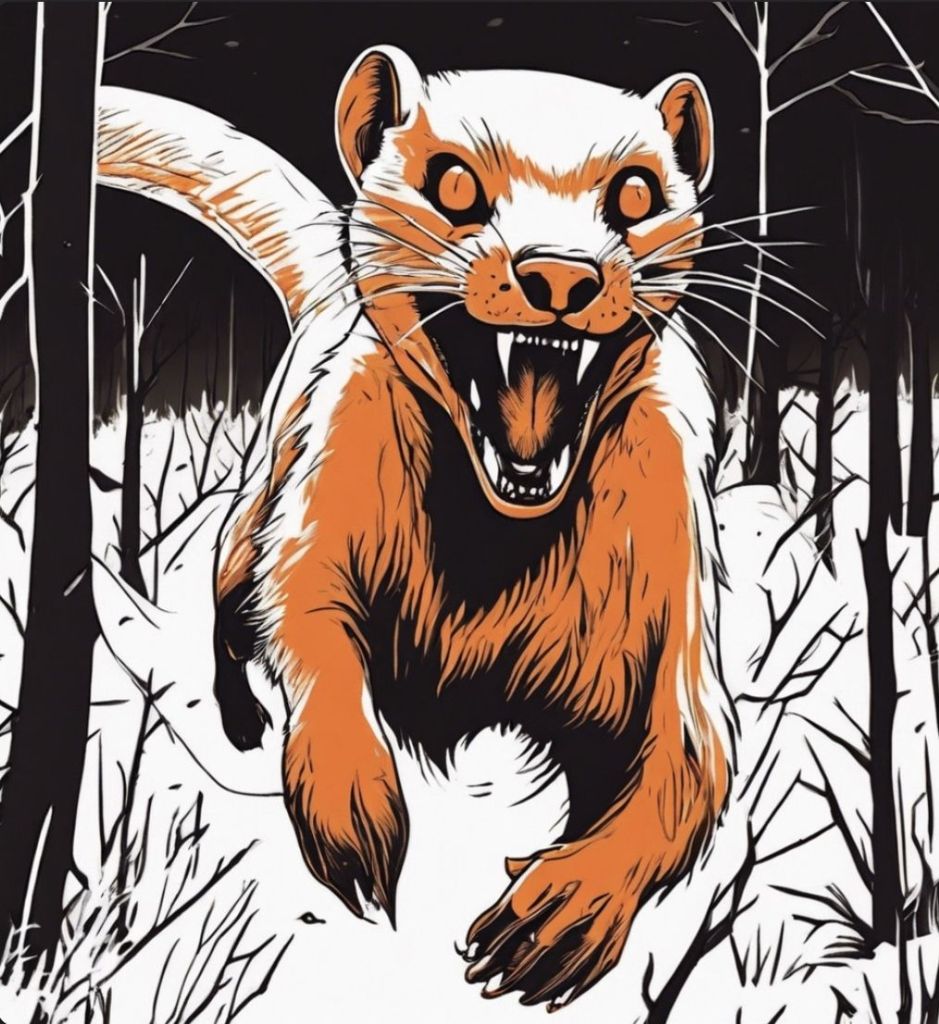
I realise he is looking behind me, out through the window. A flash of white teeth, a gleam of orange eyes and a twelve foot long ectoplasmic weasel luminous with the numinous of the divine: a deity of ancient days, when humanity was young. A deity of ancient tastes, red human lives, back in our world and seeking — what? I cry out to the wind “Sredni Vashtar” — and a petulant squeak from the rooftop is drowned in thunder and the first sheet of distant lightning.
⁸
So who was the ghost? What was the connection with Saki’s imaginary Sredni Vashtar? And why has he returned? I’m holding court to the Exec and the not-so-athletic members of the NRPI I have invited to join us in case I’m forced to flee. The faster ones are less use to me and are guarding the cordon. We can’t have a voracious ancient predator god devour Swindon; Stroud is collateral damage, but…
The room is lit by prismatic lights from the rival models of Electric Pentacles, but even the most enthusiastic of us is unsure if it will work against a Saiitii manifestation of this power. The experimental Saamaa Propagators (Alexas taught to recite the ritual in response to a PKE monitor signal) are now deployed in all corridors leading to our sanctuary, but most of our people are trained to look for evidence of paranormal entities or supernatural incursions – not in confronting them.
Someone asks “Why did the ouija ask for CJ?”. I’d wondered that myself. Only thing I can think of is my fellow Ars Magica author Mark once told me about his work here as a zoologist – convincing the local badgers they had been abducted by aliens I believe. He shone a light in their eyes, sprayed them with ketamine and inserted a tracking implant for wildlife study — so could he have upset the local badgers to the point they had called upon their ancient god? Were they planning revenge on all his fellow authors? Do badgers even know how to read? I could call David in Tokyo and get Mark’s number. I am about to when I mention he keeps ferrets: then everyone tells me to stop, and asked how I offended him? Why does everybody assume I am offensive?
***
Well that question has not been answered; a bunch of screaming, slobbering and slurping and everyone starts cowering. “Well clearly it wants CJ” someone suggests, and so out I go to confront the beast. (A mustelid I think Richard said – its unnatural size and the darkness makes it hard to identify but he thinks it might be a Pliocene era ancestor of its modern ilk. It seems to fluctuate in size at will too according to his observations).
My reckless dash in to the dark is not motivated by heroism; word has reached us that our shadowy rivals from the Civil Service outfit The Laundry might have been called. No way are we letting some spooky government outfit mess this up. Its rumoured they have built a Ghost Containment HQ in Cheltenham, a toroidal (donut shaped) particle accelerator that can hold entities like this indefinitely – for study. You know the Public Sector; they get results. If only I’d actually read James’ monograph on “The Physics of the Astral Plane” when the old boy was still…
***
It sat there in the darkness on top of the fence, looking at me. White teeth gleaming and amber eyes burning with supernatural fire. It looked me up and down with amused contempt, and then squeaked at me in a high pitched sing sing tone not unlike the children’s TV puppets of my distant youth…
“I have chosen this form. If you saw me as I truly am you’d faint, you’d be petrified, mummified, turned into stone or a pillar of salt!”
I stepped forward, palms turned outwards to show I am unarmed “Cruel Sredni Vashtar, avenger of insults, I hope I have not offended you? Why do you return to Earth? There are no aunts troubling me?”
The beast glowered with supernatural pride, something easy to write but hard to imagine unless you have seen it. I have, and you don’t want to. Sredni looked at me askance and said “I am not evil. I could be if I wanted. You don’t know what damage or harm I could do if I were roused. I could kill you all, but I won’t.”
I resisted the urge to say he was doing a pretty good job based upon the mangled corpses scattering the grounds. I resisted the temptation. I enquired gently “would you like to meet my colleagues? We can come to a deal”. I was mentally working out which Execs were surplus to requirements. Well except as weasel food…
“Who’s we? Is it that spook man Harry Price? Why, I won’t speak into it. I’ll go and smash his windows. I’ll drop a brick on him as he lies in bed. Me at the age of 175?”
It had clearly seen Steve wearing Harty Price’s hat. “One moment” I call Ed our Research Officer Ed but his phone goes straight to voicemail. Obviously asleep or at the gym?
Something about this entity: a nagging familiarity. It’s toying with me, with deadly intent. I could be shredded any second. “Oh Great Sredni Vashtar, why do you come among us?”
“I was brought to England from Egypt by a man named Holland. When I was in India, I lived with a tall man who wore a green turban on his head. Then I lived with a deformed man, a hunchback.”
I looked at him critically. “That’s unkind!”
Clearly irate he swelled to thirty foot high “I’ll split the atom! I am the fifth dimension! I am the eighth wonder of the world!”
I hesitated briefly and considered: the Saamaa Ritual or the Latin Rite? Stay with your own culture: I began the Exorcism in my abominable Latin…
He lunged towards me, poised for a decapitating strike “I am not a spirit. I am a little extra, extra clever mongoose.”
I suddenly and abruptly laughed. “Gef? Did Voirrey send you?”.
***
Now despite my avowals above, every bit of this section is true. It was a mistake anyone could have made. 1993, and I was running the Cheltenham Psychic Research Group: and I gave a talk at Cheltenham Library open to the public on the strange case of Gef the Talking Mongoose. I talked at length about the family in their remote Isle of Man farmhouse, the teenage daughter Voirrey, and I suggested that Gef was a psychosexual release for her adolescent passions and took a rather Freudian line; I was too young to know better, and had read too much Nandor Fodor I suspect.
Nowadays almost everyone has heard of Gef – its pronounced “Jeff” in case you were wondering, and trust me I have it on very good authority. Back in 1993 it was far more obscure – the World Wide Web still lay in the future, and Fortean research was still confined to small organisations, fanzines and the Fortean Times. Voirrey had not said anything about the haunting at Cashen’s Gap and her ghostly mongoose since the seventies, and I assumed she was long dead.
So when elderly Mrs Irving who always came with her friend joined me after the lecture for a cup of tea and said laughingly “You are a very naughty boy CJ to say all those things” I just assumed she meant it was a little risqué to discuss sexuality at a public talk. She stood around sipping her tea and I wandered off to chat to Gary Skidmore’s cute daughter.
It was twenty years later that I learned from Christopher Josiffe that Voirrey had left the Isle of Man and transferred to Dowtys Bishops Cleeve branch on the outskirts of Cheltenham. I remember her correcting me on another occasion for calling her Valerie, and thinking Voirrey well that’s a coincidence. She died twenty years ago, before I realised. I lost the chance of a lifetime, and speculated on an elderly woman’s teenage sexual fantasies while she sat and – praise Sredni! — laughed, and said nothing.
I could see why she might be miffed.
So I’m home now, writing this, and I can’t help but feel Voirrey had the last laugh. I invented a cover story about dismissing the entity by reversing the polarity and crossing the streams on one of our more experimental devices, and the Laundry are probably scouring Ellis’ Tractatus Hypergeometria trying to steal the magickal technology.
Gef returned in my overcoat pocket, and has settled in well with the cats, encouraging them in their feral and destructive ways, encouraging Marmalade to interrupt webinars and hurtling up and down the stairs at 3am with Loki. With Hansine he displays old world courtesy; though his habit of repeating in English exactly what the cats think of us is less appreciated.
So why did he return after so long, and where had he been? Asking a being as potent as Sredni/Gef such questions is met with a dismissive roll of the eyes, and a shrug. Fortunately he has got really in to Taylor Swift now, and watches her videos on YouTube all night, and listens to his mp3 player though he says “put the bloody gramophone on”. I’ve bought him the Eras Tour video for Christmas and who knows maybe we will see her show? I mean he can pass as my assistance mongoose?
And so while I begin the sad business of organising the elections to replace those ASSAP Execs who were sadly consumed by Gef, I’d just like to wish you all a most excellent Christmas, and Gef just squeaked his message -“I am a ghost in the form of a mongoose, and I shall haunt you all with weird noises and clanking chains.”
So it’s not Jacob Marley, just Gef. Merry Christmas!
I originally wrote this back in 2017 but it is useful every year. One less thing to worry about in the holiday season!
“I notice a number of friends believe they have failed at Whamageddon. They are wrong! Rule 3 is relevant here. Only the original version applies.
Now unless you are playing the 1984 vinyl cut (Epic / GA 4949 (UK))
you are actually going to be hearing the 1985 reissue that is a cut down version of the 12″ ‘pudding mix’ – a remix – the only version available on CD or digitally. Remixes don’t count by the rules – but the version everyone thinks is original is a remix of the first release, which is only accessible to vinyl collectors.
In fact the original mix was never released in its entirety: the ’84 versions are both taken from the same take, but the 7″ 1984 version was never released again and was superseded by the 1985 edit. So you are almost certainly still in if the version you heard was digital or CD and if by original version you mean the unreleased extended version you definitely are.
Hope this helps? You are still alive and not off to the halls of Whamhalla!”
And I think I missed my vocation in law! I’d have been a good barrister. 😉
By the way if you are very curious or just tired of life you can lose the game by playing the original mix on YouTube here
There is less going on than in the Pudding Mix but unless you knew it was the original you might not even notice!
Watched Uncanny episode 1. What a fantastic case! I hope if you have not seen it yet you will go and watch it, and warning here that there are major spoilers below. Also if you are happy to be entertained and spooked and not critique things move on — obviously it is my job to analyse ghost cases, so I don’t have that possibility or I might.
What follows will make no sense if you have not watched it (BBC2 so should be on iPlayer) yet. Go watch it first – it really is worth it. If it all pans out then it is technically a veridical haunting and that is like finding a leprechaun riding a unicorn. The first term means the case involved information being given that could not have been known to the witness – the second term haunting in the technical sense is a case where the same apparition is seen by independent witnesses separated in time.
Now I’m known to be a major critic of the theory that neurotoxic mould inhalation causes hallucinations; fortunately there is no need for me to rehash the absence of supporting medical evidence as the witnesses to “Miss Howard” were either side of the renovations. And even if all concerned were tripping their proverbial off on psilocybin they would hardly hallucinate the same thing?
Now nobody as far as I know thinks the Phillip Experiment had anything to do with suggestion; Owen thought it proved PK, psychokinesis and followed Kenneth Bacheldor’s idea that psi impedance or inhibition could be overcome by attributing the psychic effect to an external agency. I’ve conducted a lot of experiments in that direction (even via Freeform larp) and could have suggested an equally simple but much more effective test than Danny’s creative writing glass séance. Sadly nobody ever asks me anything!
So has Danny struck gold, no platinum? Maybe! I can suggest explanations and how to test them. If these simple things can be done Danny has found an all time great case.
First up how can the two sets of witnesses almost a decade apart have seen the same thing? Well there is one major possibility we should rule out – it is surprisingly easy to induce false memories in people, especially false memories of childhood. So all we need is a single witness who can state Kate told them about Miss Howard before she discovered the blog in 2010. It’s not that I disbelieve her, I absolutely do but we need some record. An email, a forum post, a letter, a datable conversation.Given this experience has affected her deeply for so much of her life, this seems likely to prove simple. She told a few friends then stopped talking about it. Did she tell anyone in her childhood? Her parents? We need independent verification.
2. When did each family move in to the house? The experiences were about a decade apart? Dates would be useful. The biggest issue is that Miss Howard died 8 years before the first witnesses moved in – was she remembered in the village? Did kids at the Primary School tell stories about her? Was there something about her that made her memorable? Did post addressed to Miss Howard still arrive? Eight years make it seem unlikely, but where did both families reside before they moved in? I don’t think any of the witnesses were old enough to remember Miss Howard, but might be worth talking to others who grew up in the village. The reason I wonder if the story of “Miss Howard” came first is that all witnesses knew the name – it seems more likely from a seeding story than anything else? Knowing which schools the girls attended would be very useful?
3. Kate was able to identify Nora H as the ghost from a photo. Were the other witnesses not? Obviously now the shown has been screened its too late. However were the witnesses asked to independently describe the apparition to a police artist? I thought there were discrepancies in the descriptions?
4. The best bit was the discovery that 65 and 95 were the same address. The problem is we have the researchers word for it, and having been a TV researcher I know what a dubious bunch we are. Becky and I both immediately suggested a renumbering, but the 1960s is quite late and thirty houses a major change. (Imagine the postal chaos!). If there was a ring road or similar built that demolished a lot of houses many streets shortened I know: normally though numbers are retained or added to a street, not subtracted. Fortunately I was able to independently verify this (see below).
5. Why did we not see the 2008 blog? The mother was the source of the piece – and if the mother experienced the hauntings as well as the daughter, she may well have asked around and quickly established that a Miss Howard resided in the house. She might have then named the ghost, and the name then been transmitted by local gossip, until unconsciously learned by Kate?
I must say I found it absolutely fascinating. I absolutely think the case should be properly written up for the journal. Interestingly the apparitions act according to the manner they should according to Becky’s PhD. I love the fact the TV show kept to the podcast format and am genuinely fascinated!
Some Research
After the show I stayed up for three hours. I was quickly able to verify most of the stuff from the show – while not adequately masking the address is an ethical disaster, it meant it was entirely possible to verify most of what was presented as history. It took me two minutes to find the house but ten minutes to find William French and Miss Norah Howard. The Howard family were a big deal in early 20th century Melbourn, one of the four major families from what I can make out. Jubal owned the bakery and Norah worked there and there is a great deal and all the photos used of the Howards in this book. I was also able to find a report on the Will of Miss Howard. The facts are as presented, and she was a pretty wealthy lady – that’s about £325,000 in modern money.
Problems?
The apparitional descriptions did not really give an age, but implied a Victorian or Edwardian spook. This puzzled me, as the house was probably not that old. The houses were built sometime I believe in the in the late 20s or early 30s – they look like buildings of that era I associate with ribbon development. The house was maybe 50 years old at the time of the first sightings, which is neither here not there, but argues against the mould nonsense.
The house number change was exactly as presented; well almost it apparently occurred in the early 1980s, which would be after the first witnesses according to one site I found, but I suspect that is an error and the show is correct. I will verify this later. I checked no.67. That house was lived in by the Baker family since WW2 and Miss Ellis and Miss Hughes before.
I have found a more significant problem: the inhabitant of the house was for most of its history Hilda Thompson (1935 to 1957). In 1957 it was bought by William E French (who clearly did not die in the war) and in 1960 in moved Norah Howard with him. So they may have been cohabiting there from 1957 but she only lived in the house at most for the last six years of her life. Or did she? I checked and there was an earlier house on the site of No. 65 – and it looks like it was home to Jonah Howard, who I seem to recall had a withered arm and was a shoemaker? It is entirely conceivable that his sister did indeed live with him in this previous house.
I only had three hours last night to do a lot of research though admittedly I did it all from my bed: given a day in Cambridgeshire I’m sure I could find a great deal more. It is a bit frustrating that apparently it took the BBC researchers a great deal of effort to do what seems fairly simple to me – and one of my real frustrations is that despite fifteen years as a TV Researcher, being a historian and also as it happens a parapsychologist at least by the definition used by the show, no one who makes decent paranormal TV is ever willing to pay me to research for them, preferring to do it in house. If I’d had the chance to help plan this I honestly feel I could have taken a really good case and made it a truly great one.
Oh and for Bold Street Timeslips see Dr Ann Winsper obviously! https://youtu.be/qNfvraEoebE?si=dDbeTEToGsfPqD3Z She is the absolute authority on the area, and I’m going to ignore that whole angle and most of what the experts said, and just address the evidential value of the case. I’m not finished yet though!
What is the actual underlying nature of paranormal events? I will suggest three ideas of how it might work – tell me which you think the evidence most suggests? This is my three tier model so feel free to critique it and say why it’s wrong.
So I think explanations for genuine paranormal events (assuming here such a thing exists) fall in one of three layers of cause – which are:
Spiritual. This is transcendent phenomena- Supernatural, originating from outside of our universe (Time/Space). Such things result in alterations or interruptions to the normal rules of physics, causality and existence and we can only observe the effects not the direct cause. Paranormal phenomena are directly caused by entities outside our Universe changing our reality by altering its programming as they see fit.
Ghostly: this model suggests a subtle energy field that overlies our known world but has not been detected by science. Minds, consciousness and the deceased may exist there after their earthly version ceases to exist. Often called the Etheric, after the luminiferous æther a substance through which light was believed to travel in late 19th century physics but discredited in the early 20th century. Spooks exist in 3 dimensional space but alongside the existence our senses percieve.Paranormal phenomena are natural but outside of our current ability to scientifically predict or percieve or explain properly.
Psychic. In this humans have the capacity to reprogram chance/entropy/gravity by psychic means: telepathy, psychokinesis, healing and clairvoyance exist as little understood psi powers. Ghosts are often manifestations of our own psychic abilities conveying us information about the past or haunting ourselves. Like dreams, psychosomatic illness or perhaps some talents the psychic does not understand or control these powers and often mistakenly attributes them to an external source. Again in this version paranormal events are natural just not yet understood.
So which do you think is correct?
Another way of looking at it is simpler – my In/Out idea. Phenomena exist either in the human mind, or externally. Philosophers historically have often argued for two types of stuff that make up reality – dualism – and a common divide is between mind stuff, like consciousness and physical stuff like brains and trees and gravity and the sky. (There are some odd cases like mathematics where we can debate which it falls into).
If ghosts are mind stuff as we would expect of a disembodied consciousness they might well be perceived by other minds but you would not see them with your eyes or get a photo of one, and they would not be measurable by any scientific instrument. They might be completely real: lots of mind stuff may be very real but science deals with physical stuff not the mind stuff (psychic) realm. So this is my In ghosts: objective hallucinations, perhaps sentient entities but no longer physically embodied so only able to interact with us through our minds – and we are normally unconscious of their presence.
The Out ghost is much more friendly to ghosthunting: it’s a physical entity that exists in the universe occupies a position in space and time and works through (unknown) physical laws. If we see it we see it with our eyes because light photons bounce off it and we can perhaps detect it with monitoring devices. It’s physical but like gravity hard to measure and model without the right devices: we normally see the effects.
Still Out ghosts exist in the physical universe; In ghosts in the realm of consciousness. Which is correct?












 If these simple things can be done Danny has found an all time great case.



 "And sometimes he's so nameless"